

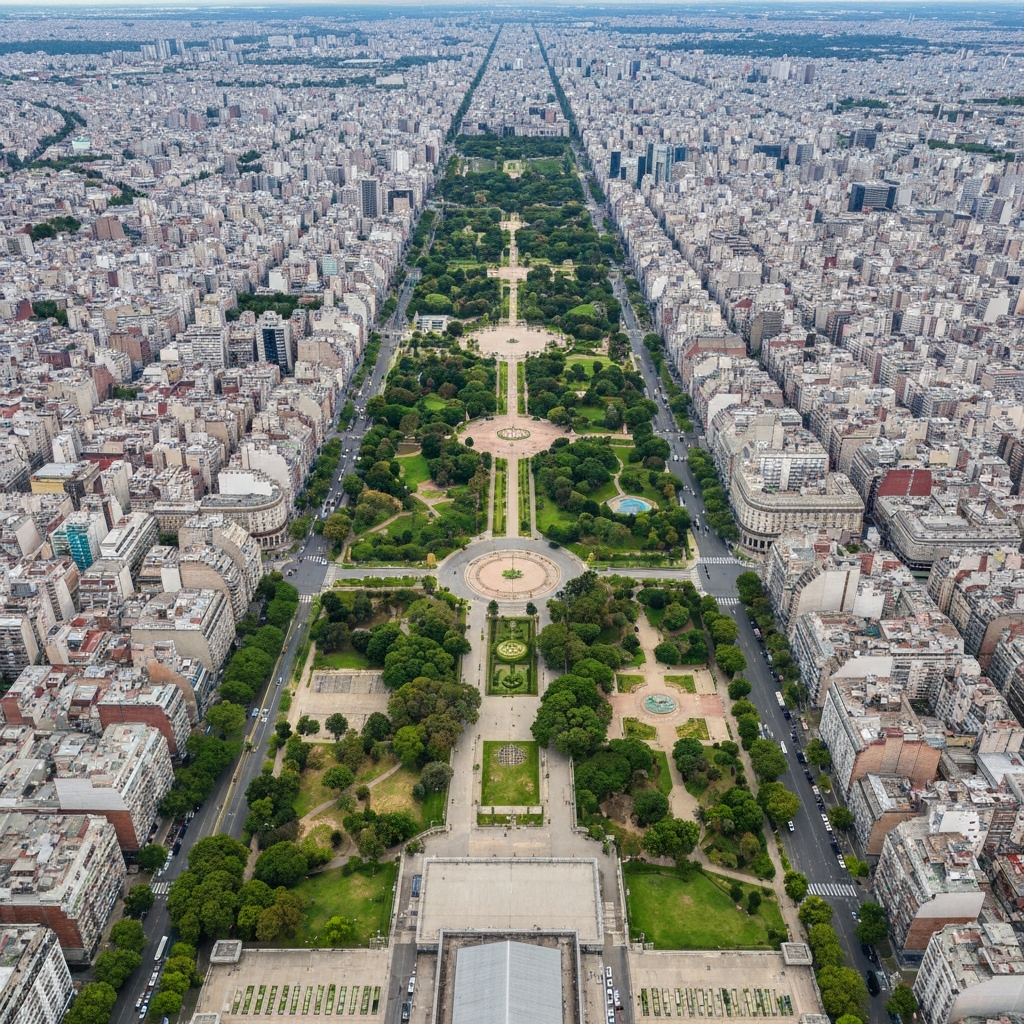
Buenos Aires, like many major cities worldwide, experiences the Urban Heat Island (UHI) effect—a phenomenon where urban areas are significantly warmer than their rural surroundings. This temperature disparity arises primarily from human activities and urban development patterns.
What Causes the UHI Effect?
The UHI effect is mainly due to the replacement of natural landscapes with concrete, asphalt, and buildings. These materials absorb and retain heat more than natural surfaces, leading to higher temperatures in urban areas. Additionally, waste heat from vehicles, industrial activities, and air conditioning units contributes to this warming.
Impact on Buenos Aires
Studies have shown that Buenos Aires exhibits a noticeable UHI effect, with temperature differences of 2-3°C between urban and rural areas. This effect is more pronounced during summer months and can lead to increased energy consumption, elevated air pollution levels, and health risks, especially for vulnerable populations.
Mitigation Strategies
To combat the UHI effect, Buenos Aires has been implementing several strategies:
- Green Infrastructure: Expanding urban green spaces, such as parks and green roofs, to provide shade and promote evaporative cooling.
- Reflective Materials: Using light-colored and reflective materials in buildings and pavements to reduce heat absorption.
- Urban Planning: Designing urban layouts that enhance natural ventilation and reduce heat accumulation.
These measures aim to create a more sustainable and comfortable urban environment for residents and visitors alike.
Looking Ahead
As climate change continues to influence global weather patterns, the UHI effect may intensify. Ongoing research and adaptive urban planning are essential to mitigate its impact and ensure the well-being of Buenos Aires’ inhabitants.