

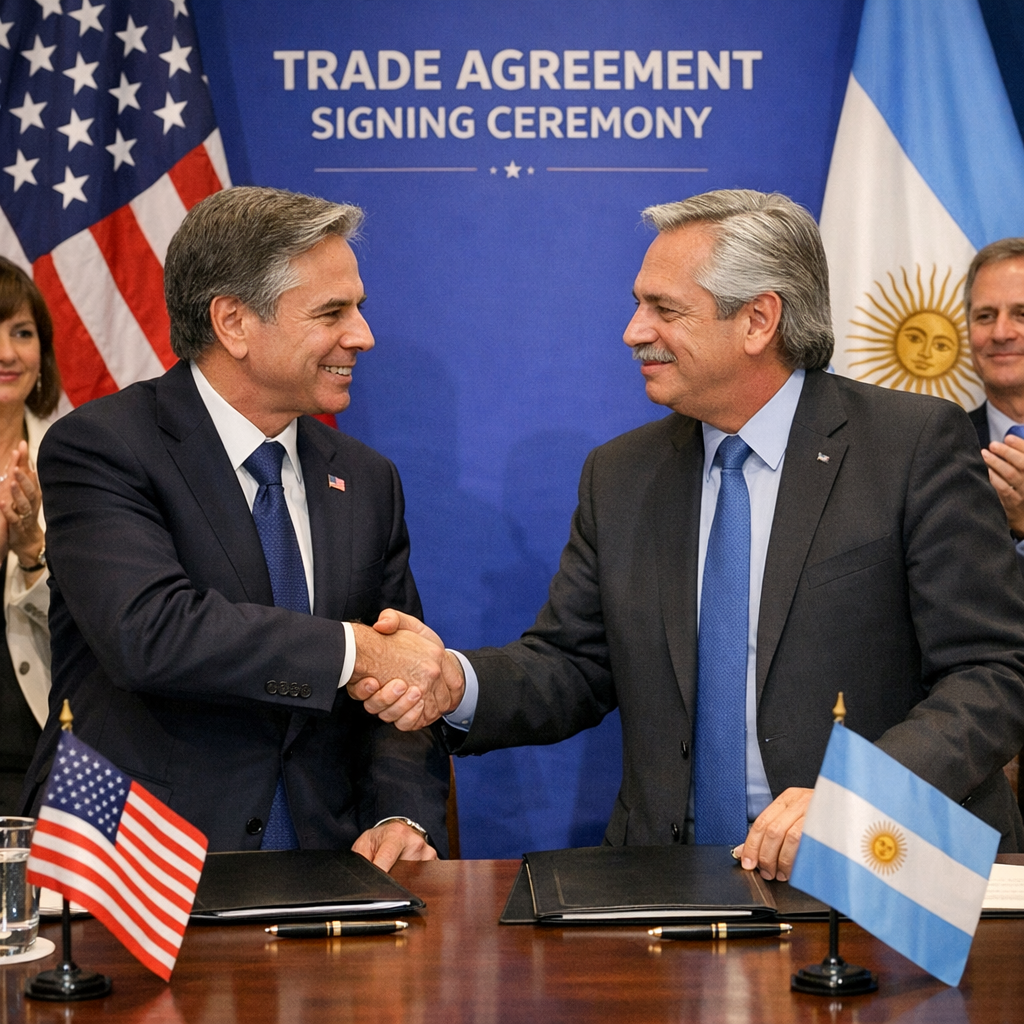
In recent years, the United States and Argentina have taken significant steps to deepen their economic partnership. A notable milestone in this journey is the signing of the United States–Argentina Agreement on Reciprocal Trade and Investment (ARTI) on February 5, 2026. This agreement aims to reduce trade barriers and enhance market access for a variety of products between the two nations.
Key Provisions of the ARTI Agreement
The ARTI agreement encompasses several critical elements designed to foster mutual economic growth:
- Tariff Reductions: Argentina has agreed to eliminate tariffs on 221 product categories, including machinery, transport equipment, certain chemicals, medical devices, and auto parts. These products will now enter Argentina duty-free or with significantly reduced levies.
- Beef Import Quota: The agreement expands the U.S. beef import quota to Argentina, allowing up to 80,000 metric tonnes in 2026, distributed in quarterly tranches of 20,000 tonnes each.
- Critical Minerals Access: Argentina has committed to facilitating U.S. investment in its critical mineral resources, particularly lithium and copper, which are essential for various industries.
Economic Implications
The ARTI agreement is expected to have several economic benefits:
- Increased Trade Volume: By reducing tariffs and other trade barriers, both countries anticipate a boost in bilateral trade, leading to economic growth and job creation.
- Investment Opportunities: The focus on critical minerals opens avenues for U.S. companies to invest in Argentina’s mining sector, potentially leading to technological advancements and infrastructure development.
- Market Diversification: Argentine exporters will gain better access to the U.S. market, allowing for diversification of export destinations and reducing dependency on traditional markets.
Challenges and Considerations
While the agreement presents numerous opportunities, there are challenges to consider:
- Regulatory Alignment: Both nations will need to work closely to align regulatory standards to ensure smooth implementation of the agreement.
- Domestic Industry Impact: Industries in both countries may face increased competition, necessitating support measures to help them adapt to the new trade environment.
- Environmental Concerns: Increased mining activities, especially in critical minerals, must be managed responsibly to mitigate environmental impacts.
Conclusion
The United States–Argentina Agreement on Reciprocal Trade and Investment marks a significant step in strengthening the economic ties between the two nations. By fostering a more open and collaborative trade environment, both countries stand to benefit from increased economic activity and investment opportunities. However, careful implementation and ongoing dialogue will be essential to address challenges and ensure that the agreement delivers on its promises for all stakeholders involved.