

By Sofia Gonzalez
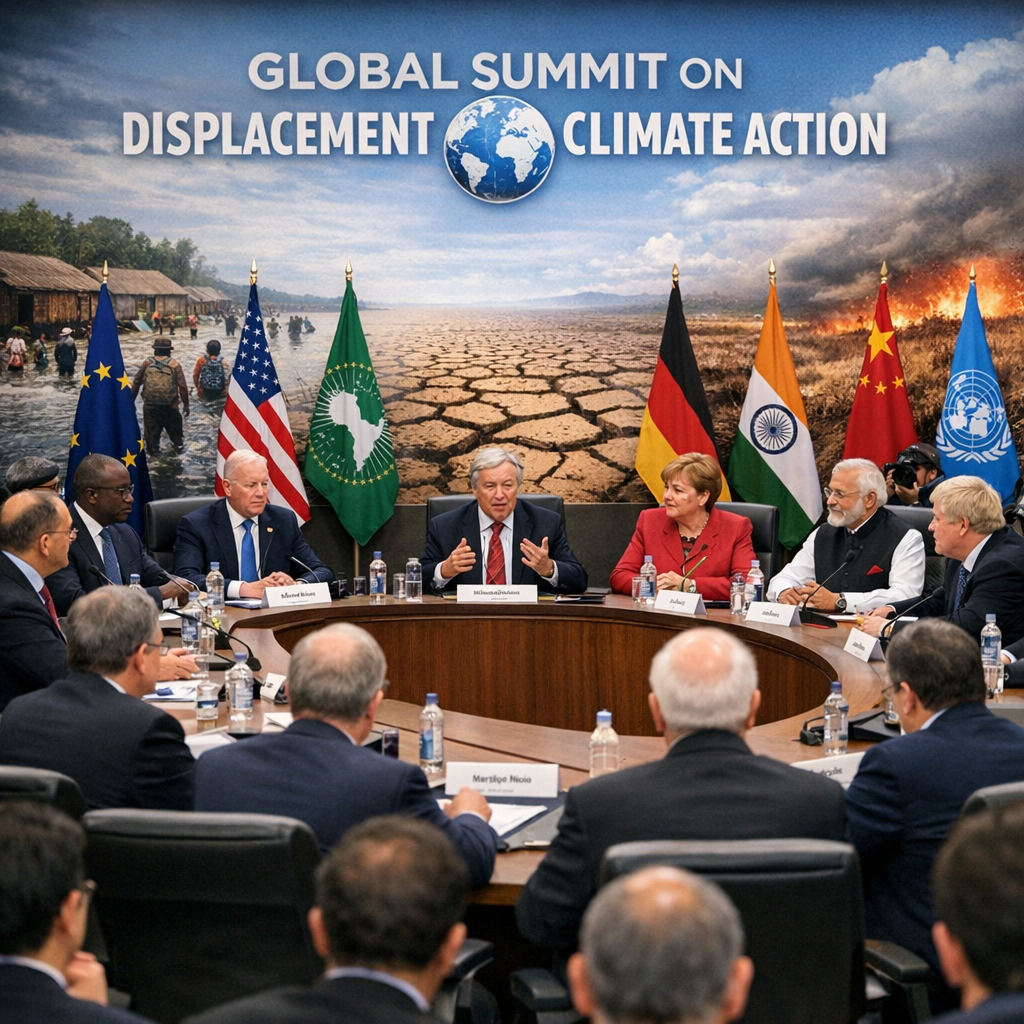
We often hear about acute crises in the news—conflicts, disasters, health emergencies. But some of the most pressing global developments are less visible and more structural. Two in particular stand out right now: the ongoing scale of forced displacement, and a shift in climate governance toward implementation and accountability. These are matters that affect everyone, even from Buenos Aires.
Forced Displacement: A Persistent Global Reality
According to the latest UN Refugee Agency report, by the end of 2025 there were approximately 117.8 million people worldwide displaced by conflict, violence, persecution, or human rights abuse. Of those, 41.6 million were refugees or people needing international protection across borders, while nearly 69 million were displaced within their own countries. Many of those returning home are doing so into very difficult conditions.
Long-term displacement is now the norm: the majority of refugees remain in limbo, in neighbouring countries or in protracted situations where assistance may be available, but reconstruction, normalcy, and dignity are often out of reach. Low- and middle-income countries—many already under economic pressure—bear the brunt, hosting the lion’s share of displaced populations.
Challenges Ahead
With returns increasing in some places, the struggle is now to ensure safe, sustainable reintegration: housing, access to healthcare, education, livelihood. Without good infrastructure, security and stable political systems, many refugees or internally displaced people find themselves cyclically vulnerable.
A Shift in Global Climate Governance: From Promises to Action
In recent months, climate policy has started moving beyond pledges toward governance structures that aim to enforce, enable, and accelerate action. A new Work Programme under the Global Climate Action Agenda (2026-2030) seeks to operationalize commitments made during recent UN climate conferences. Instead of negotiating new targets, the emphasis is now squarely on delivering existing ones, and doing so with transparency.
New coordination mechanisms—the so-called Axis Coordination Groups—are helping align efforts across thematic areas like energy transitions, finance, nature-based solutions, cities, and adaptation. This reflects a growing recognition that solving climate change requires systems integration: one policy cannot stand alone.
Implementation Meets Equity
For many countries—especially those in the Global South—these changes bring both hope and concern. Hope, because stronger governance and clearer accountability can mean more support and more predictable cooperation. Concern, because existing inequities in resources and infrastructure threaten to leave behind communities that are already vulnerable to climate shocks. These include small island states, regions hit by desertification or intense storms, and populations with weak access to basic services.
Why These Trends Matter Here in Buenos Aires
Argentina, like many countries in our region, is affected by both forced displacement and climate risk—even indirectly. Whether through migrants from neighbouring countries, demands on public services, cross-border humanitarian responsibility, or through climate-driven events such as floods, heat waves, or agricultural shocks, the cost and complexity of these global trends are felt locally.
Understanding how international governance is evolving helps us evaluate policymaking at home—what obligations Argentina has, where aid and technical cooperation might flow, and what kinds of partnerships may benefit local communities. These are not abstract issues: progress or neglect abroad often shapes what we experience here.
Looking Ahead
- Greater emphasis on durable solutions for displaced populations: long-term plans rather than temporary fixes.
- Increasing demand for accountability in climate commitments—whether through national reviews or international cooperation.
- Global health and social systems under pressure to respond to overlapping crises—for example displacement compounded by disease outbreaks or environmental disasters.
- Opportunity for citizen awareness and cross-border solidarity to influence global action and national policies.
These developments remind us that the world is not just what happens day to day—it’s also what policies endure and how societies respond over the long term. For Buenos Aires, as for every city, staying informed means staying prepared.