

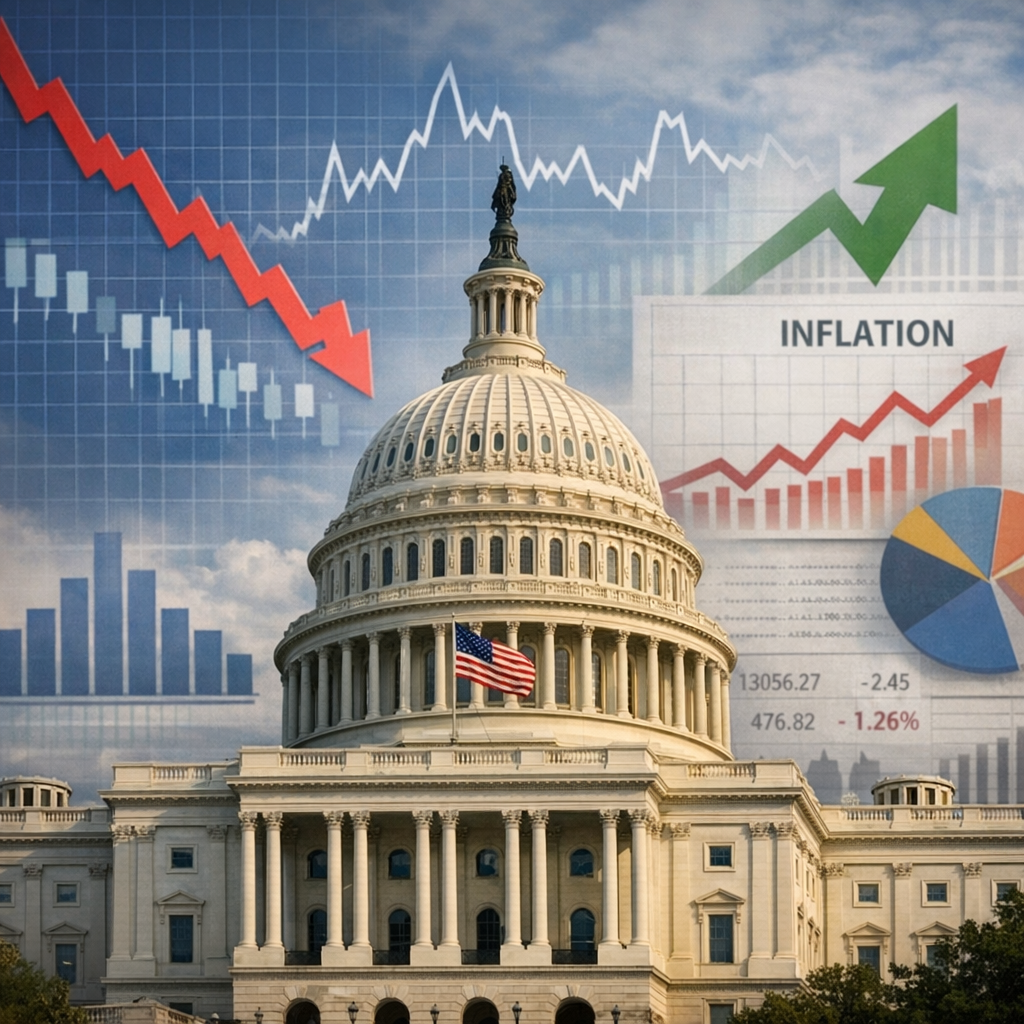
The United States is currently experiencing a period of significant political and economic activity, with developments that have far-reaching implications both domestically and internationally.
Political Landscape
As the 2026 midterm elections approach, the U.S. political scene is marked by intense activity. The Republican Party, under the leadership of Speaker Mike Johnson, holds a narrow majority in the House of Representatives. Meanwhile, the Democratic Party, led by House Minority Leader Hakeem Jeffries, is strategizing to regain control. Redistricting efforts across various states are reshaping the political map, influencing the balance of power in Congress. Notably, Florida Governor Ron DeSantis has proposed new congressional maps that could impact Democratic representation, while Virginia voters have supported a Democratic remap affecting Republican incumbents. Additionally, an alleged assassination attempt on President Trump at the White House Correspondents’ Dinner in April 2026 has intensified partisan debates over political rhetoric and violence.
Economic Challenges
The U.S. economy is navigating a complex landscape characterized by fluctuating indicators. Recent data reveals a 0.3% increase in wholesale inflation for September, maintaining the annual rate at 2.7%. Retail sales saw a modest rise of 0.2% during the same period; however, when adjusted for inflation, consumer spending effectively declined by 0.1%. Consumer confidence has also taken a hit, reaching its lowest level since April, as Americans express concerns about job security, the cost of living, and the overall economic outlook. In response to these challenges, the Federal Reserve is contemplating adjustments to interest rates to stimulate economic growth and manage inflationary pressures.
Global Implications
The current U.S. political and economic climate has significant global ramifications. The ongoing trade disputes and tariff implementations have disrupted international supply chains, affecting global markets. The conflict in the Strait of Hormuz has led to substantial disruptions in the energy sector, with over one-third of global seaborne liquefied natural gas (LNG) typically passing through this critical chokepoint. This situation has resulted in projected commodity price increases and heightened concerns over energy security worldwide.
In summary, the United States is at a pivotal juncture, with its political decisions and economic policies influencing not only its own future but also having a profound impact on the global stage. Observers around the world are closely monitoring these developments, understanding that the outcomes will resonate far beyond U.S. borders.