

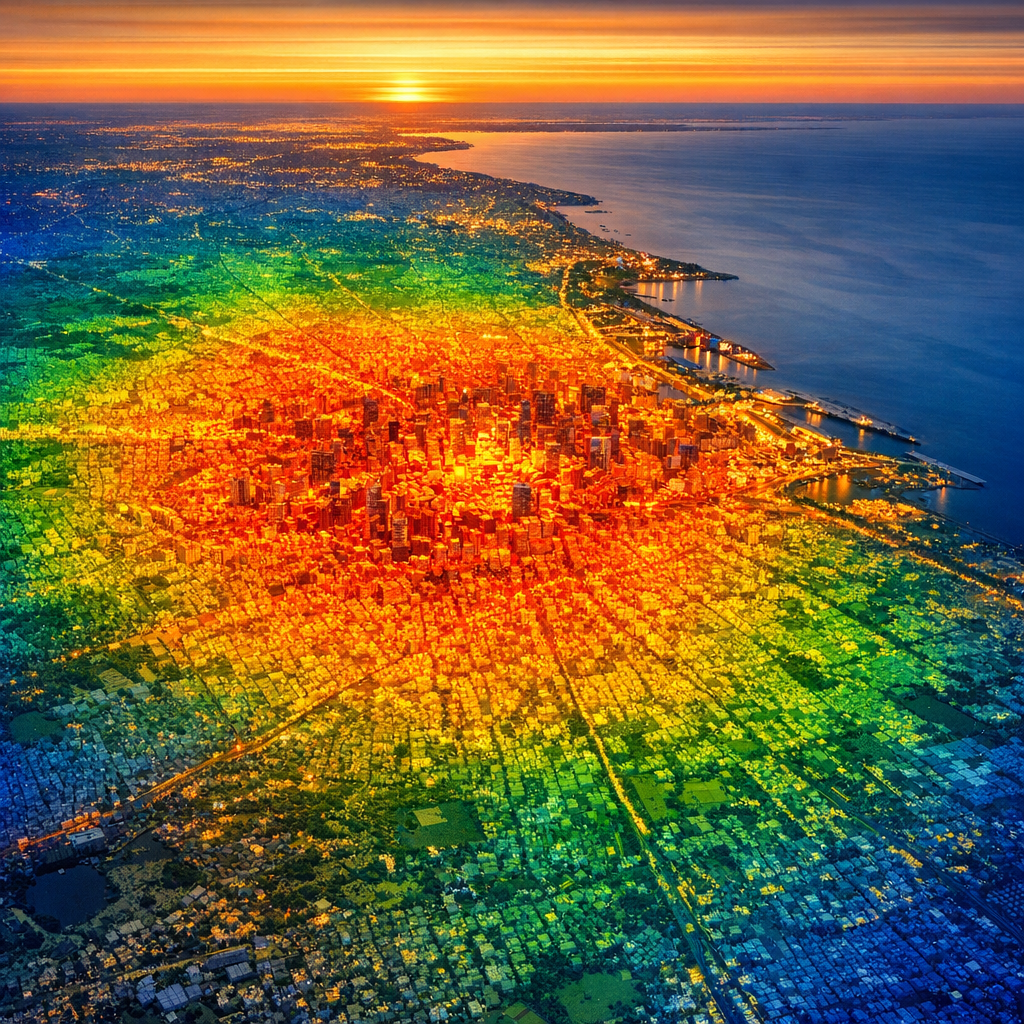
Buenos Aires, like many major cities worldwide, experiences the Urban Heat Island (UHI) effect—a phenomenon where urban areas register higher temperatures than their rural surroundings. This temperature disparity arises primarily from human activities and urban development patterns.
What Causes the UHI Effect?
The UHI effect stems from several factors:
- Land Surface Modification: Replacing natural landscapes with concrete and asphalt increases heat absorption and reduces cooling through evaporation.
- Waste Heat Emission: Energy consumption from vehicles, industries, and air conditioning units releases additional heat into the urban environment.
- Urban Geometry: Dense building structures can trap heat, limiting airflow and enhancing warming.
Impact on Buenos Aires
Studies have shown that Buenos Aires experiences significant UHI effects, particularly during summer months. Research indicates that urban areas consistently exhibit higher land surface temperatures compared to their rural counterparts, with the intensity of the UHI effect being more pronounced at night. This warming can exacerbate heatwaves, increase energy demand for cooling, and negatively affect public health.
Mitigation Strategies
To combat the UHI effect, Buenos Aires can adopt several strategies:
- Enhancing Green Spaces: Increasing urban vegetation through parks, green roofs, and tree-lined streets can provide shade and promote cooling through evapotranspiration.
- Implementing Cool Roofs and Pavements: Utilizing materials that reflect more sunlight and absorb less heat can reduce surface temperatures.
- Promoting Sustainable Urban Planning: Designing buildings and urban layouts that facilitate natural ventilation and reduce heat accumulation can mitigate UHI effects.
Addressing the UHI effect is crucial for improving the livability of Buenos Aires, enhancing public health, and contributing to the city’s resilience against climate change.